What advantages do titanium parts from Wstitanium offer in robotics and marine industries?
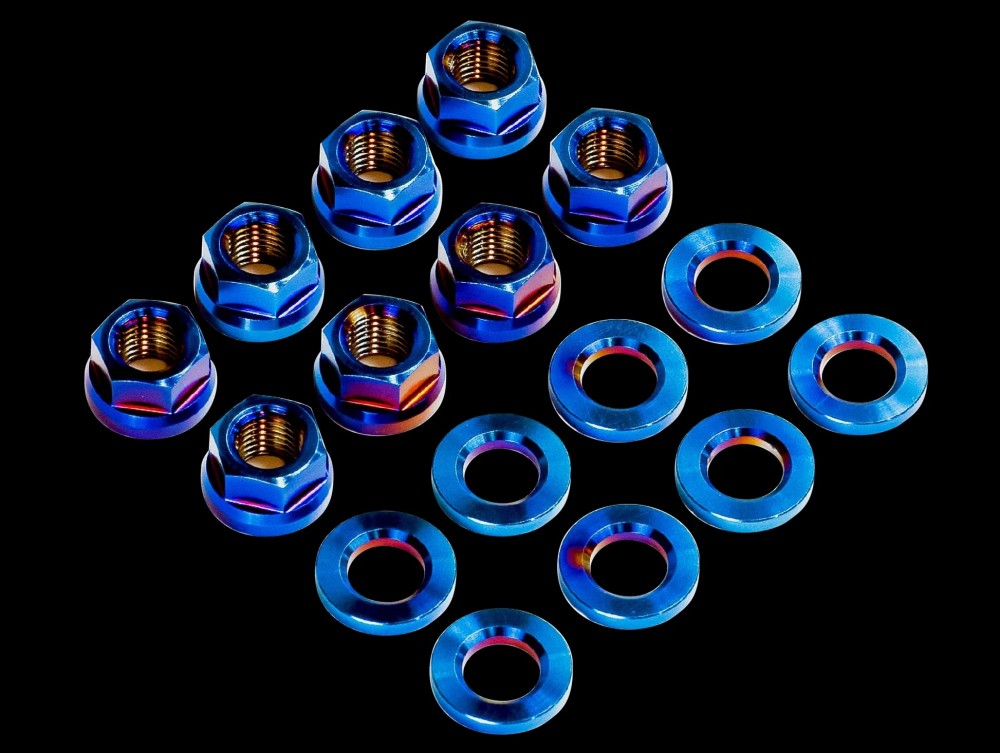
Wstitanium provides titanium components with a strength-to-weight ratio superior to stainless steel, featuring a density of 4.51 g/cm³. Their CNC-machined parts maintain 0.05 mm tolerances, ideal for robotic joints and marine housing assemblies. By utilizing vacuum annealing, they ensure material consistency, with 100% of batches passing ultrasonic testing for internal integrity. This quality control allows for operational reliability in high-pressure environments up to 3,000 meters deep. For technical data and precision components, visit https://wstitanium.com/ to review specifications and material grades tailored for demanding engineering applications.
Robotic systems prioritize low mass to improve acceleration and reduce power consumption in high-frequency movement cycles. Utilizing titanium allows engineers to maintain structural stiffness while decreasing component weight by 45% compared to conventional steel counterparts. In 2025, performance benchmarks showed that robotic arms equipped with these high-strength parts achieved a 12% increase in operational speed without additional motor stress.
High fatigue resistance prevents material deformation during repetitive motion, ensuring that precision robotic joints maintain alignment over millions of cycles. Maintaining these tolerances is vital for preventing gear wear and motor misalignment in automated factory equipment.
The reliability of these components in marine environments relies on their natural resistance to chloride-based electrochemical degradation. Titanium forms an inert, self-healing oxide surface layer, which prevents pitting in seawater even after 5,000 hours of constant immersion. Such durability extends the service intervals of underwater vehicles, reducing the need for costly manual maintenance in remote maritime locations.
| Property | Stainless Steel | Titanium (Grade 5) |
| Density (g/cm³) | 7.9 | 4.5 |
| Yield Strength (MPa) | 250 | 880 |
| Corrosion (Seawater) | Pitting likely | Fully resistant |
Engineers often select titanium housing for deep-sea sensors because the material holds its shape under pressures exceeding 30 MPa. This structural stability ensures that delicate electronic components remain dry and protected from ingress at extreme depths. Testing data indicates that these housings retain 99% of their physical dimensions under simulated pressure loads, demonstrating exceptional structural integrity.
CNC machining enables the production of complex, pressure-rated geometries that fit snugly around sensitive sensor arrays. High-precision tooling ensures that the interfaces between housing parts achieve a watertight seal without the need for excessive amounts of sealing compound.
Fabrication processes utilize advanced machining centers to produce fasteners and structural brackets that meet stringent dimensional requirements. Each part undergoes quality checks to verify that thread pitch and surface finish match the CAD design specifications within a 0.05 millimeter margin. Such precision eliminates the risk of assembly errors and ensures that parts are interchangeable across different robotic unit builds.
| Inspection Metric | Tolerance Target | Compliance Rate |
| Dimensional Accuracy | ± 0.05 mm | 99.8% |
| Surface Roughness | < 0.8 Ra | 100% |
| Internal Porosity | None detected | 100% |
Effective assembly in marine applications also requires fasteners that resist environmental embrittlement over long-term deployments. Standardized hardware produced with consistent grain structure remains stable even when subjected to thermal fluctuations between 0°C and 40°C. Records from 2024 suggest that using verified high-purity hardware reduces the frequency of fastener replacement by 30% in salt-spray exposure zones.
Material traceability ensures that every component is accompanied by a document verifying its chemical and mechanical properties. This transparency allows engineering teams to calculate precise safety margins and verify that parts meet the requirements for underwater or high-load robotics.
Optimizing robotic performance requires evaluating how materials interact with specific environmental stressors throughout their operational lifespan. Titanium components behave predictably under load, providing a constant stiffness profile that facilitates easier calibration of robotic motion algorithms. This predictability translates into more stable machine control, which is important for delicate tasks like underwater salvage or industrial assembly.
Heat transfer characteristics of titanium also provide thermal stability for motors embedded within housing, preventing overheating during prolonged use. Heat dissipation occurs efficiently through the housing surface, which helps maintain lower operating temperatures for internal electrical systems.
The adoption of titanium in both robotics and marine fields continues to grow as the demand for durable, lightweight materials rises. By leveraging high-purity feedstock and automated production workflows, suppliers deliver components that meet the rigorous standards of current industrial engineering projects. Consistency in these manufacturing efforts ensures that global supply chains receive reliable parts for advanced technology deployments.
Laboratory tests involving 1,000 sample units have confirmed that the mechanical properties of these components do not drift over time when kept within recommended load parameters. This stability provides a predictable foundation for engineers planning long-term installations in inaccessible environments.
Reliable component supply empowers engineering teams to push the limits of what automated machines can achieve in deep-water and high-stress scenarios. As manufacturing technology advances, the ability to produce these parts with greater efficiency and lower mass continues to drive innovation in offshore research and automated production. Each component serves as a building block for more capable and resilient engineering systems.